
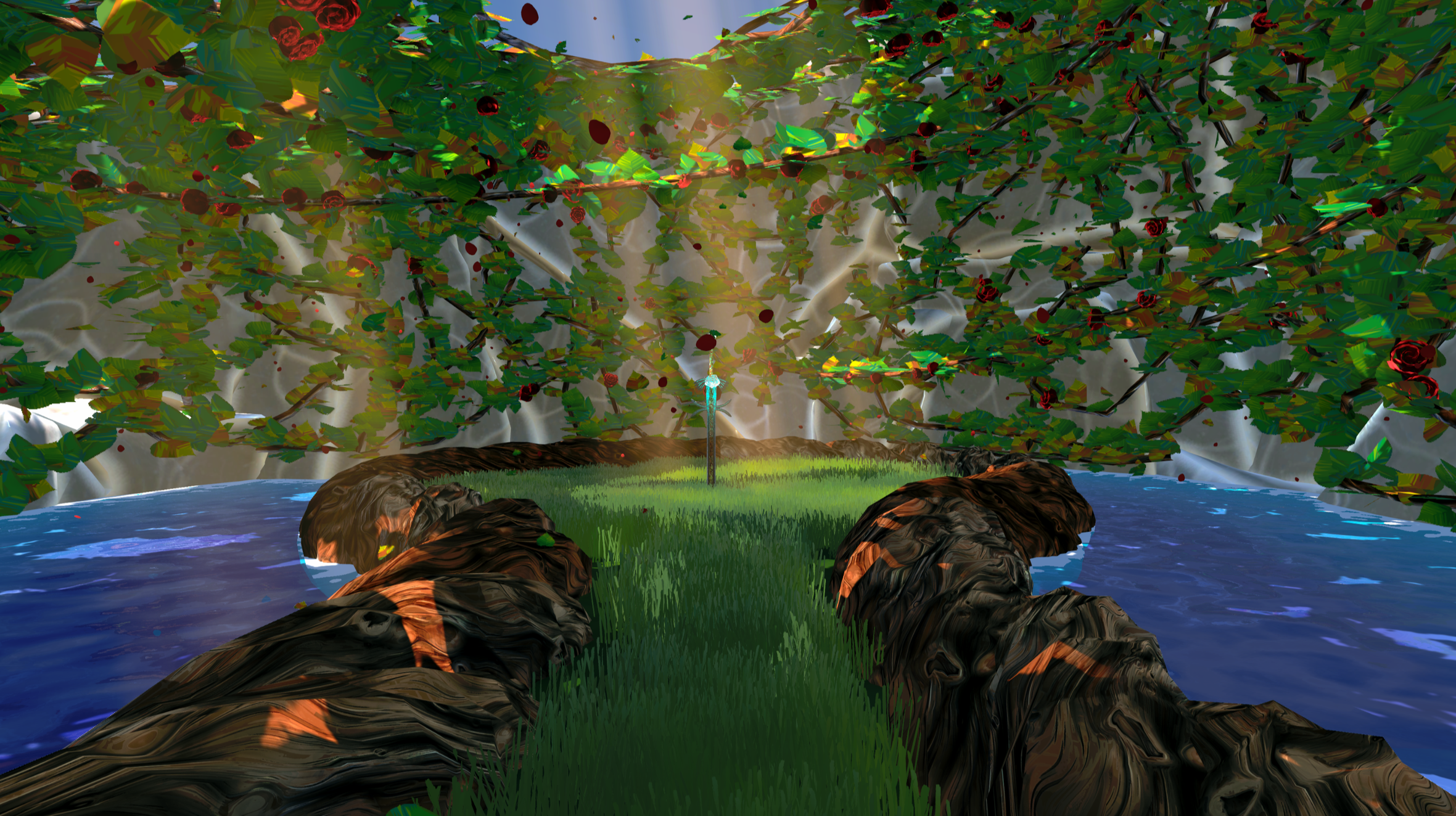
This project was my final school-year project, yet it had a huge impact on me.
I didn’t want it to be just another assignment, I wanted it to be something deeply personal. So, I took the opportunity to create a piece inspired by my grandmother, who has always been one of my greatest heroes.
I called it Last Breath because, to me, a person only truly dies when they are forgotten. This project became my way of keeping her alive, not just in my memory, but also in my work.
In my project I actually have 2 different main parts, my breathing shader and my sword.
Breath:
The breath was created to mirror the rhythm of a real person’s breathing, a quiet pulse meant to bring life, presence, and emotion into the scene.
Since my goal was to bring life to a scene that represented death, this shader became my way of expressing a final burst of life, a last breath.
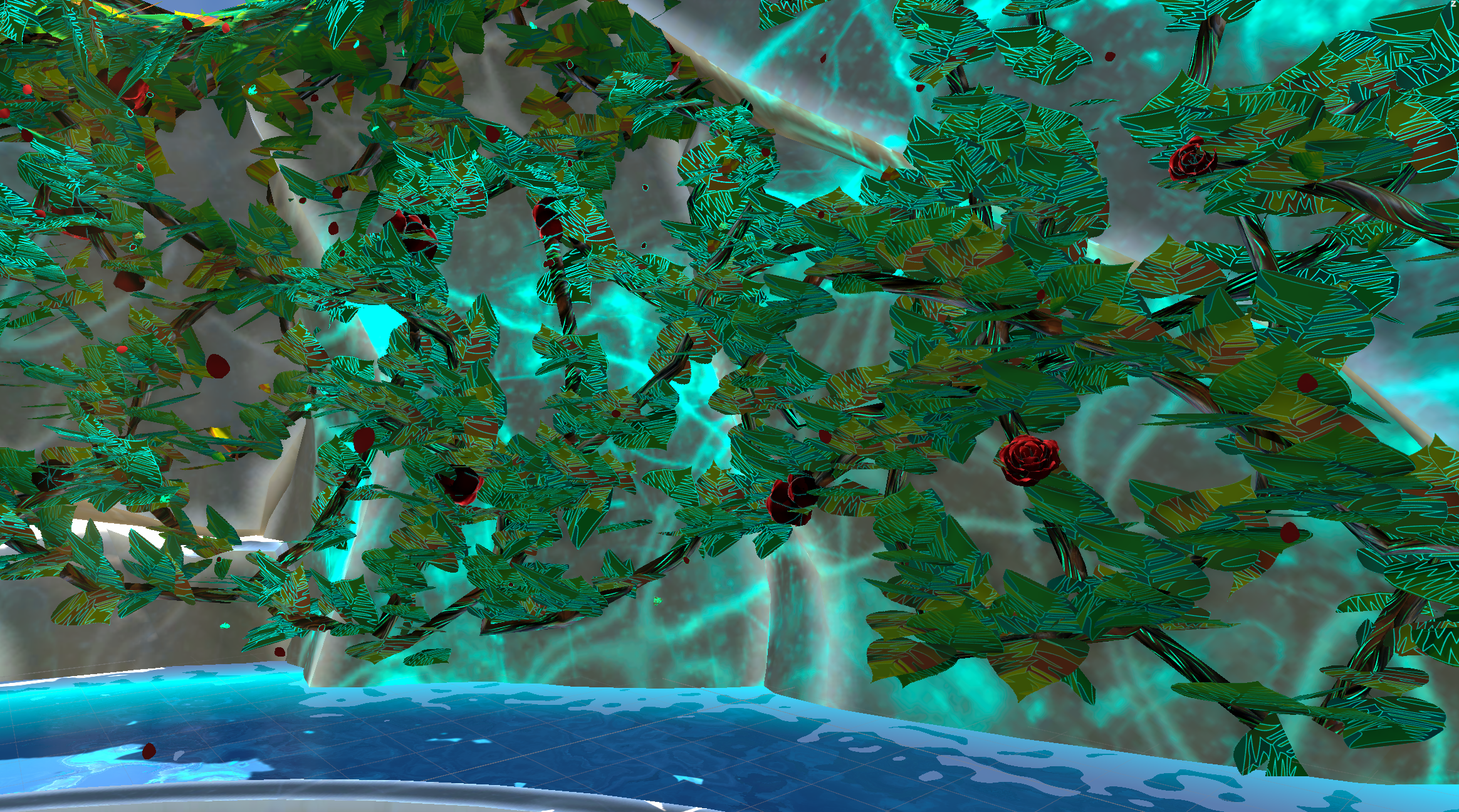
This shader affect every object in my scene to amplify it’s value
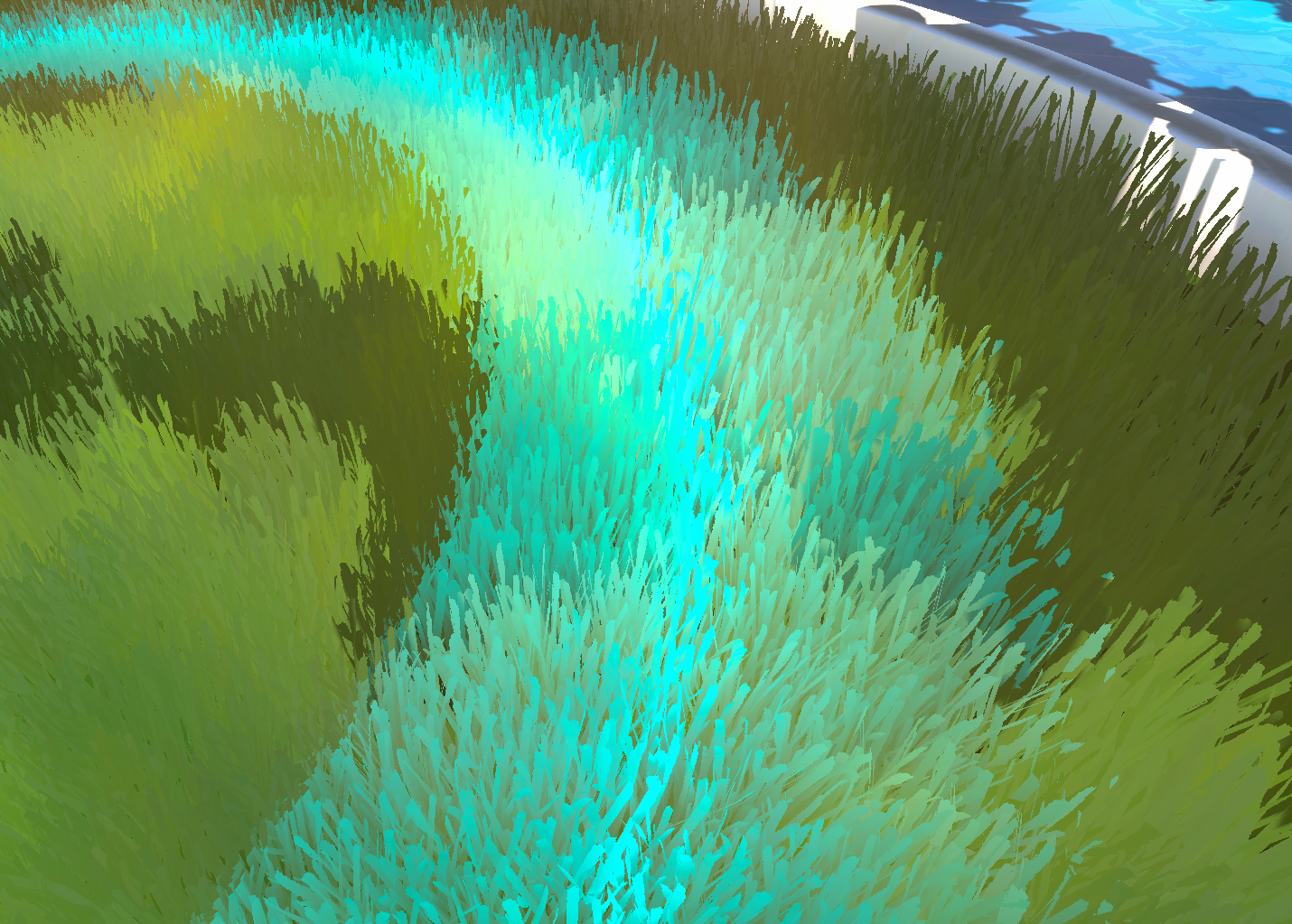
It offers a wide range of customization options from inner and outer edge blending to color, speed, size… This flexibility allowed me to fine-tune the effect throughout the entire project.
Sword:
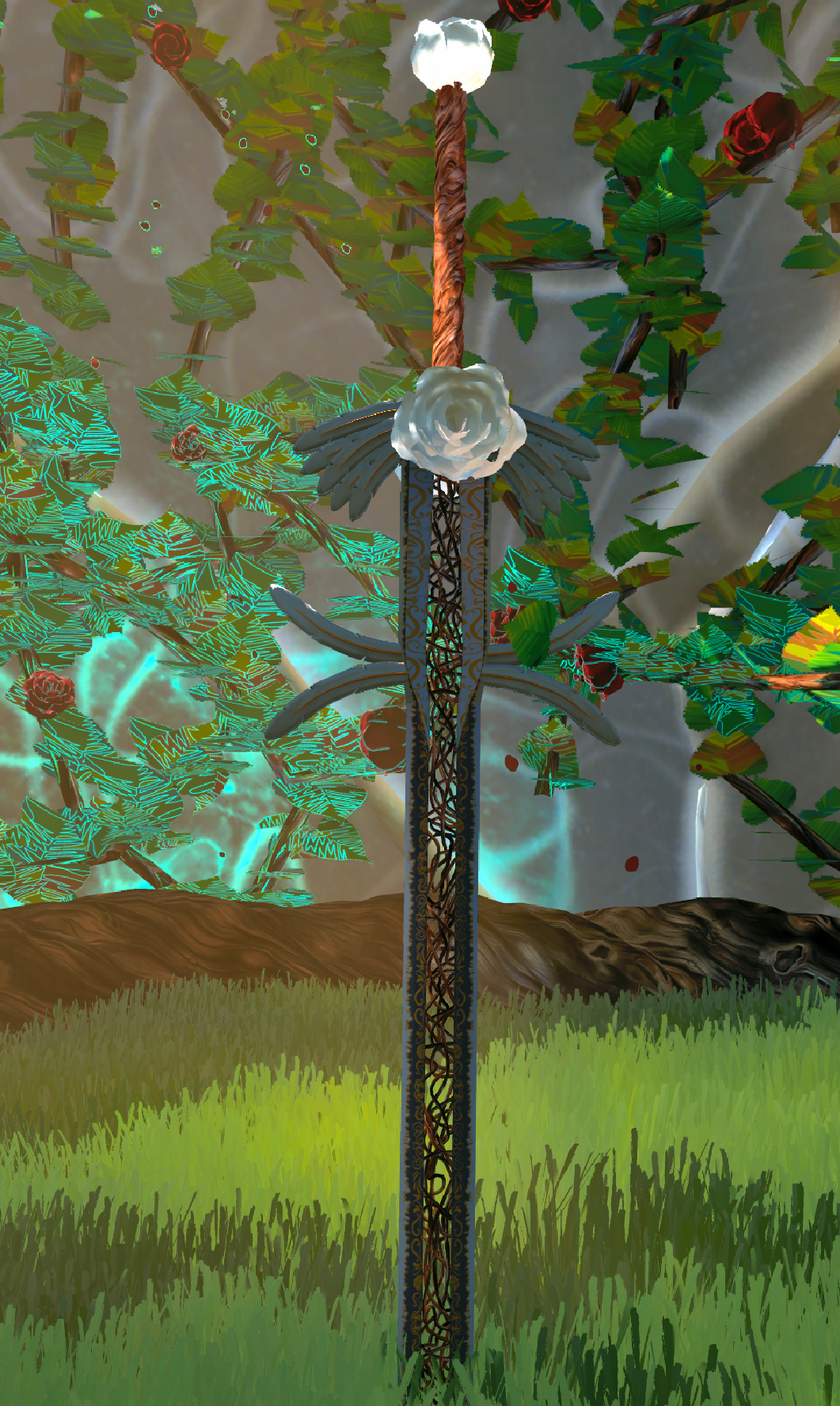
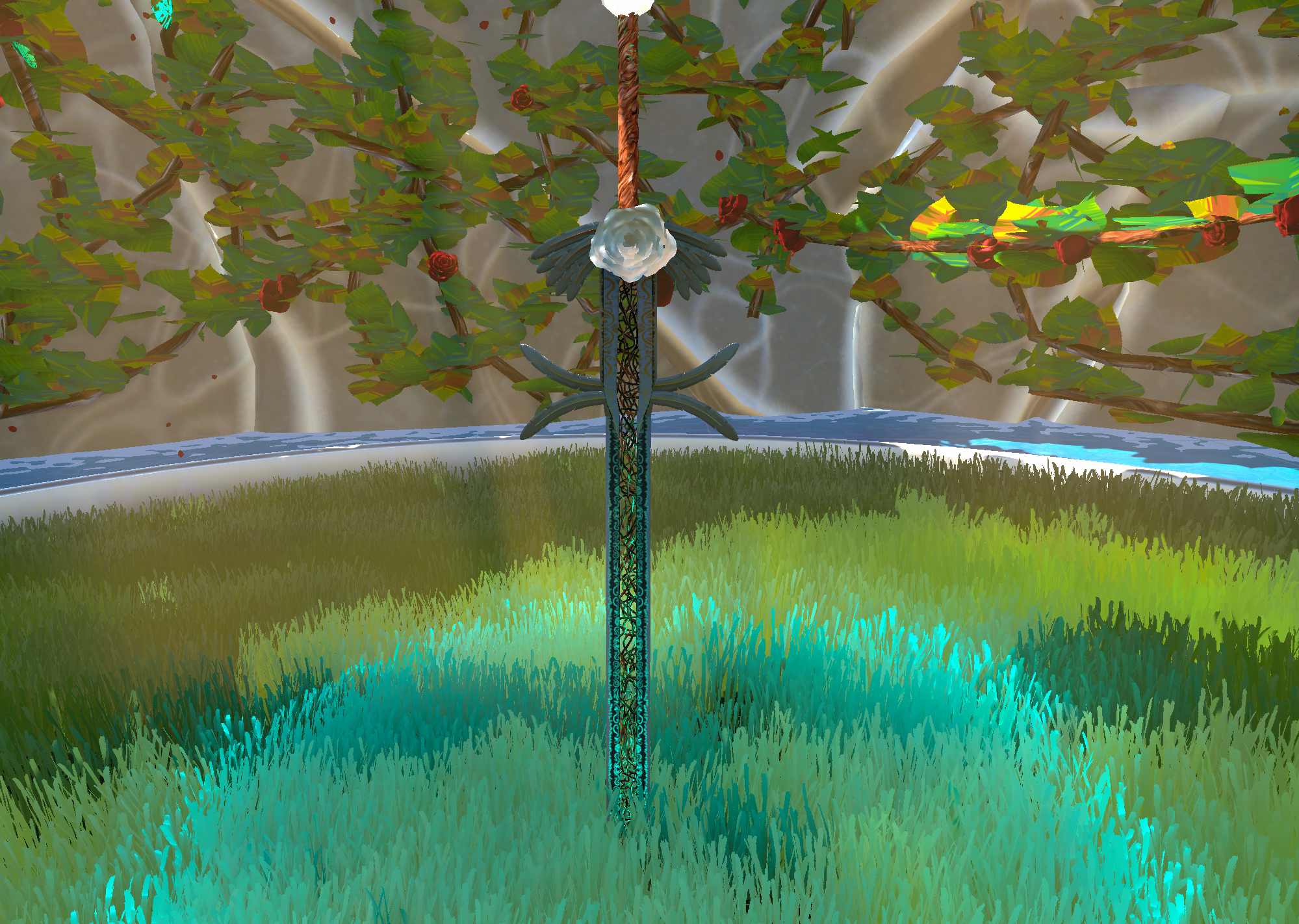
The sword was the hero prop of my scene. Its design came from what my grandmother loved and the bedtime stories she used to tell me when I was little.
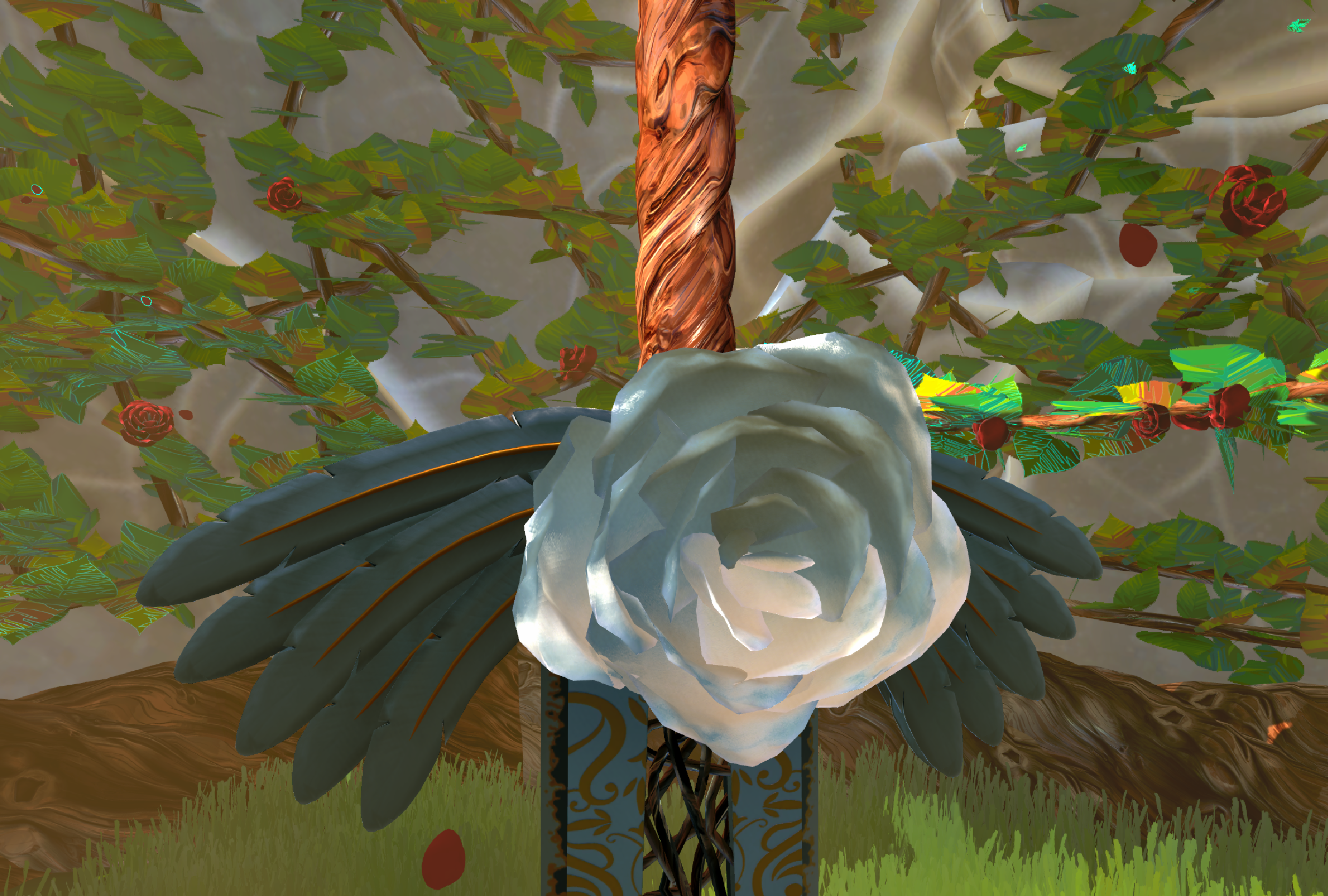
I chose to make it a Zweihänder, a big German sword that’s larger than most. I liked the extra space it gave me to play with the design, especially for the second guard. The guard itself is shaped like a rose — a symbol of love, and a little tribute to my grandmother. I went with white because, in the Victorian era, white roses represented purity, which felt right for the heroic side of the piece.
The two guards are made of feathers as a reference to Quetzalcoatl, the feathered serpent god from Mesoamerican culture. My grandmother was really passionate about that culture, so adding that detail felt personal and meaningful.
Along the blade, I added a hamon, a traditional Japanese pattern that shows the strength and purity of a sword.
For the handle, I reused a tool I had made before and applied the same material I used for my vines to give it a wooden look that tied everything together nicely with the rose theme.
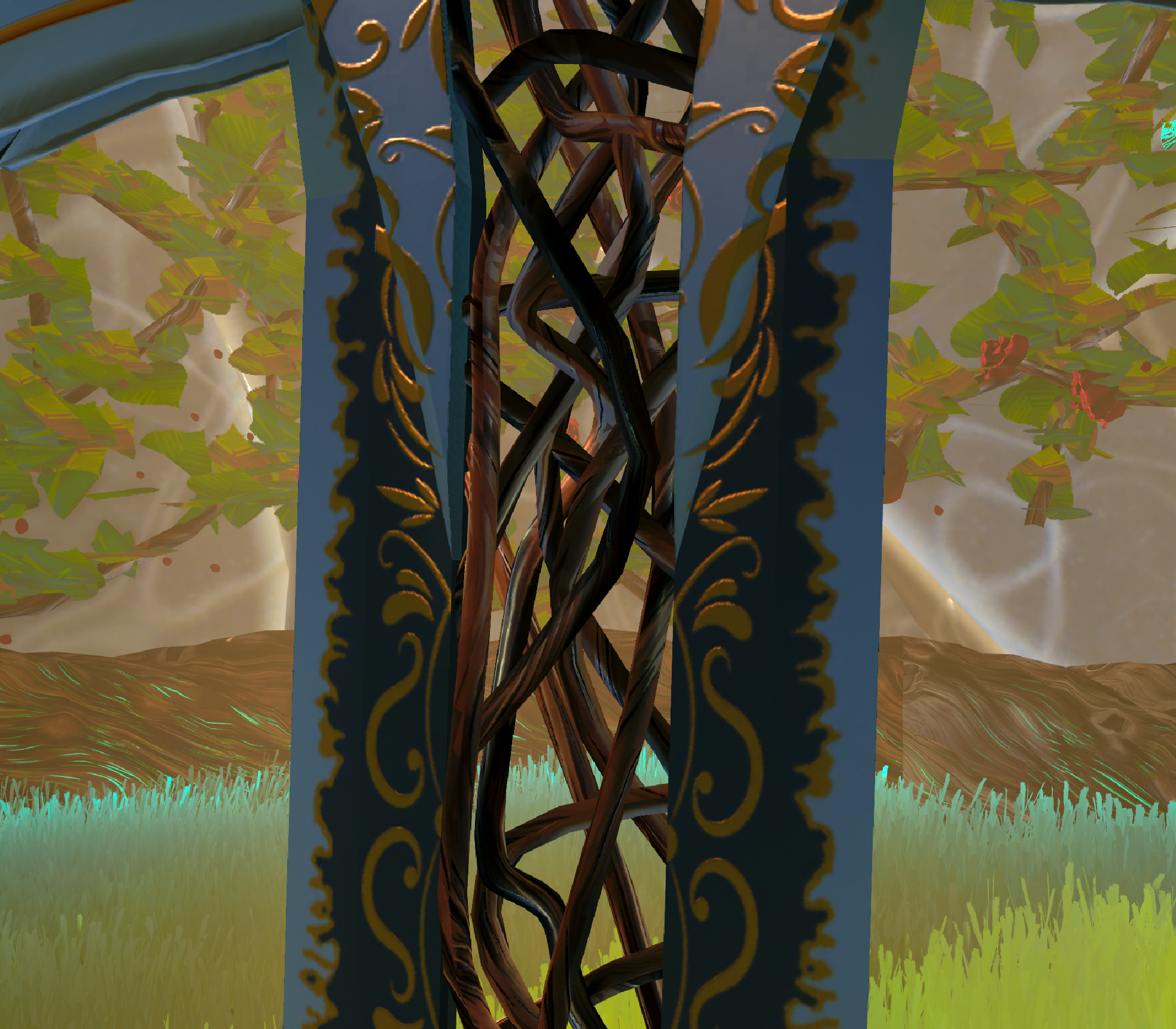
For the main part of the blade, I added Victorian-era filigree as a callback to the language of flowers I used with the rose.
I split the sword in two to represent the theme of life and death, and I added roots using a tool I made myself to connect both halves. It also ties in with the overall theme of my diorama.
The other part of my diorama included:
For the roses, since I had a lot of them in my scene, I made a tool to design them quickly. That way, I could add variation without too much extra work, which really helped speed up the project.
Roses:
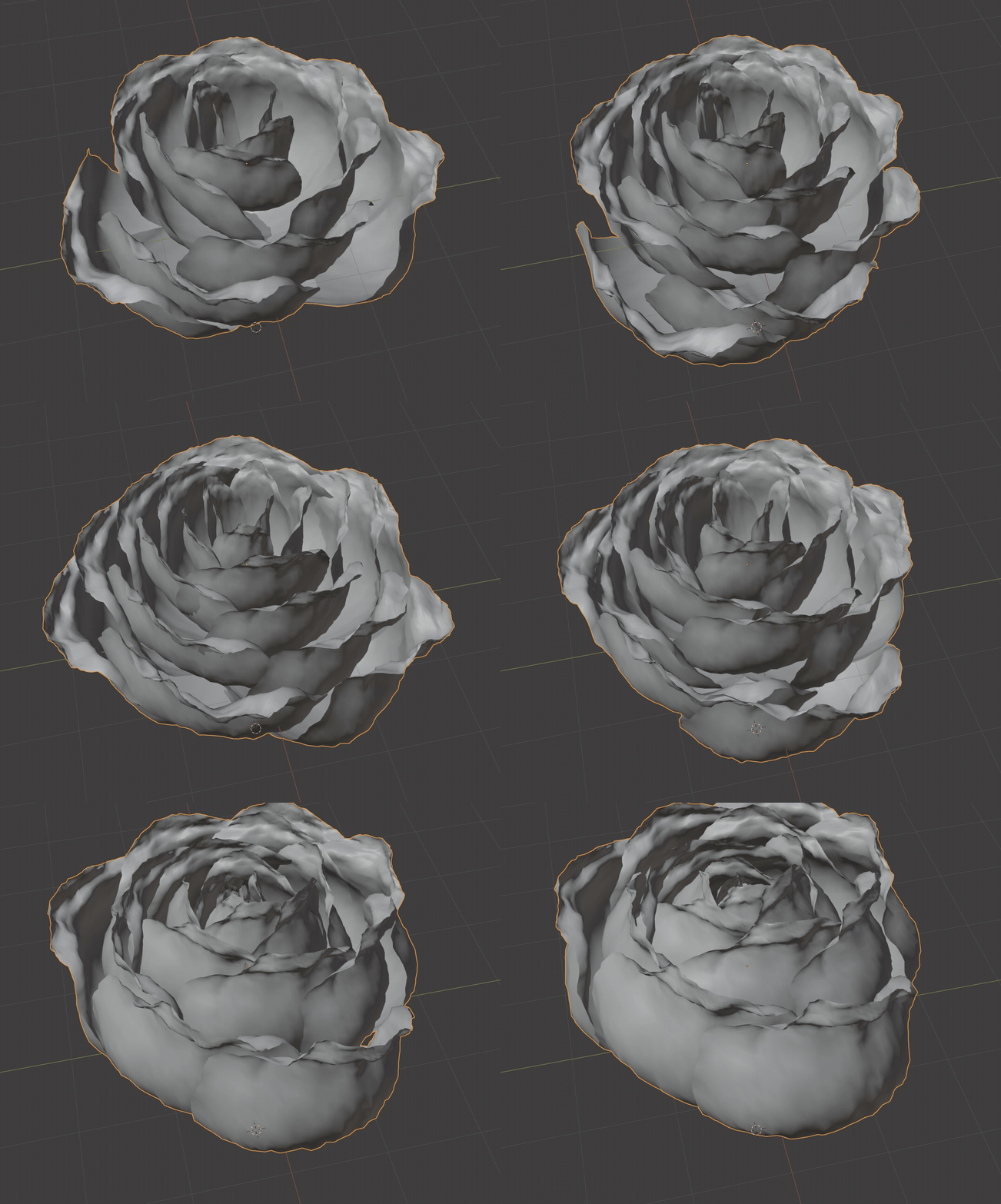
I combined them with my vine tool so they were placed along the vines automatically, which added a nice sense of randomness to the result.
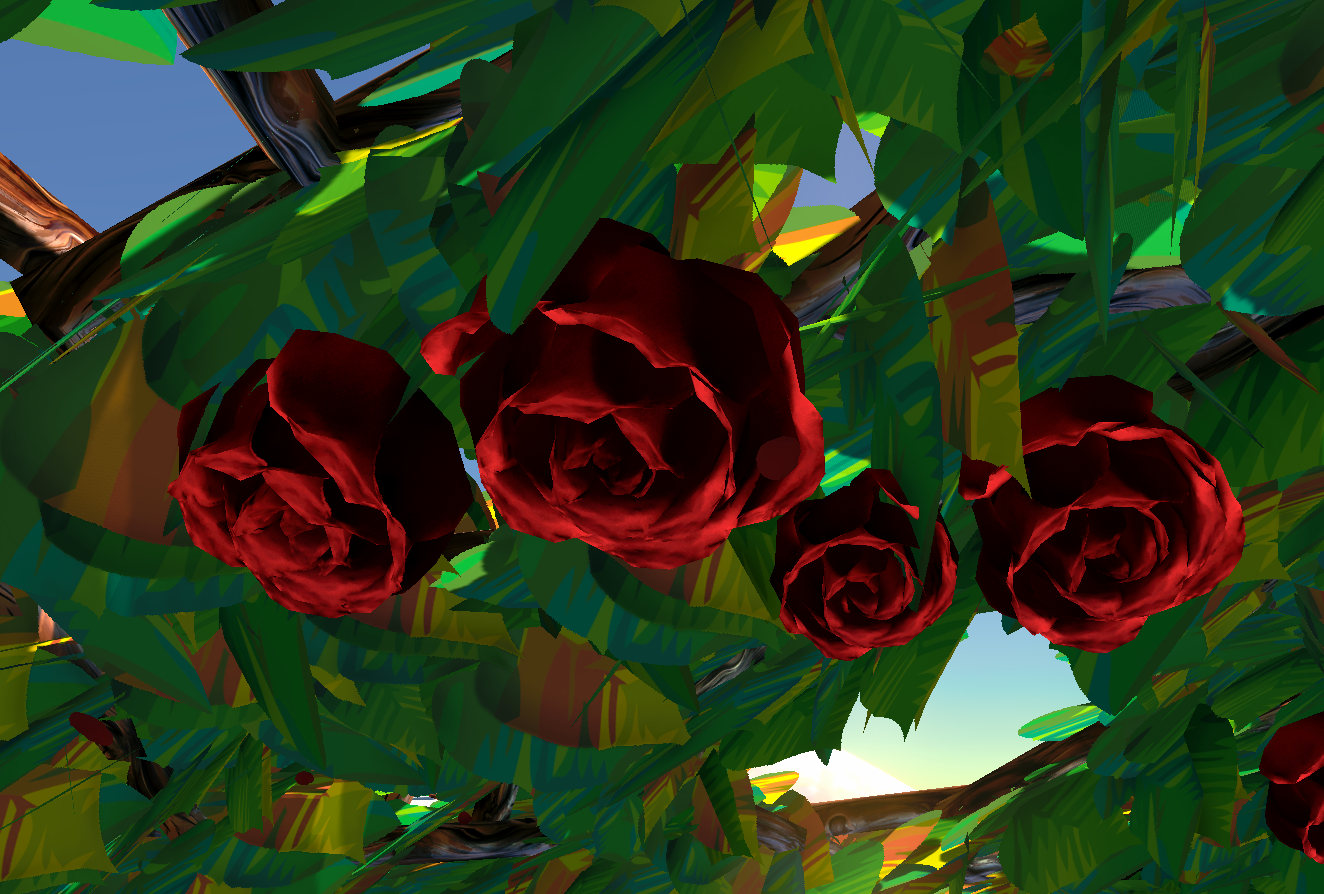
At last I combined them with my breathing shader along the edges of the petals to make the roses feel connected to the diorama
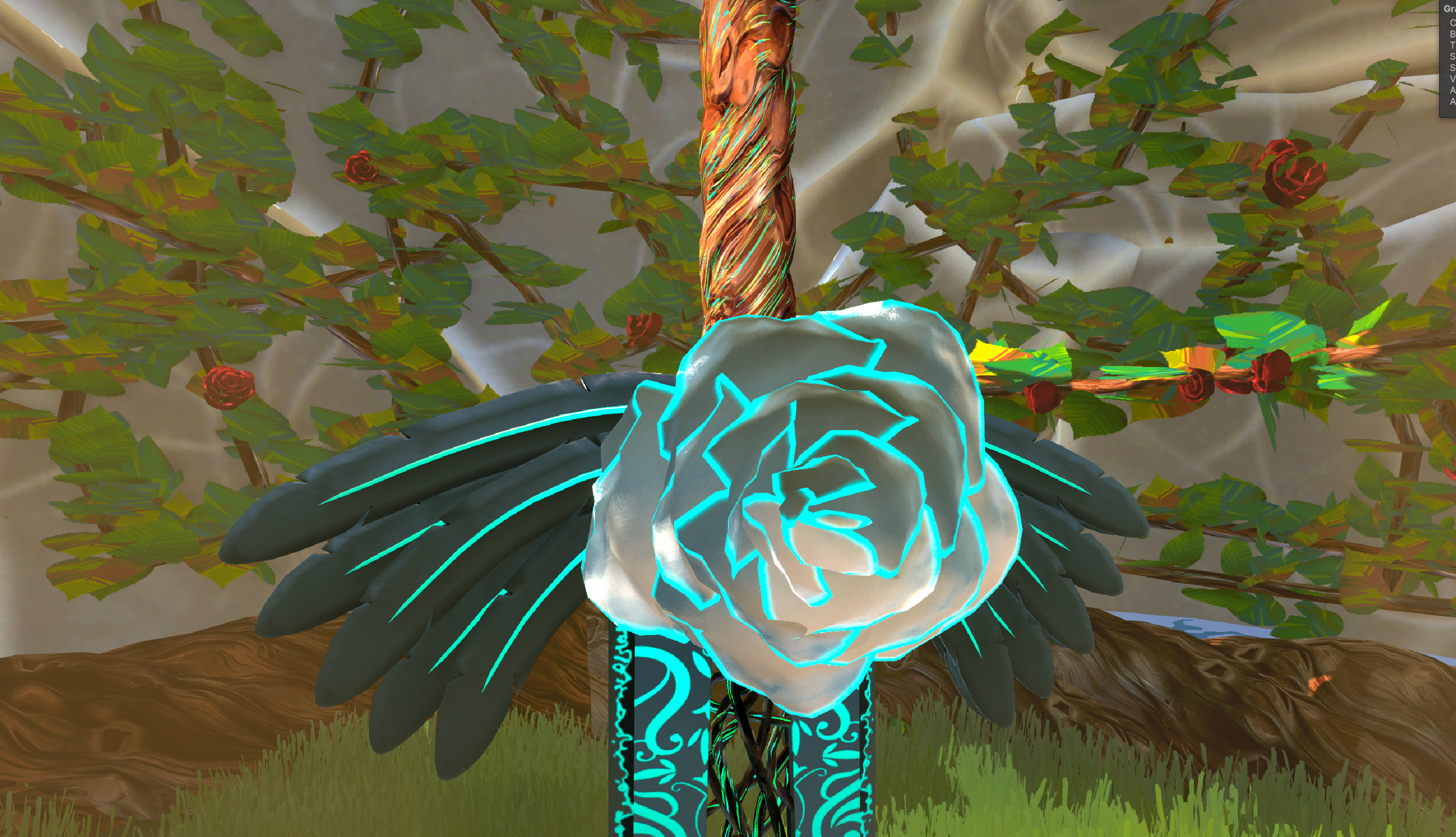
Vines:
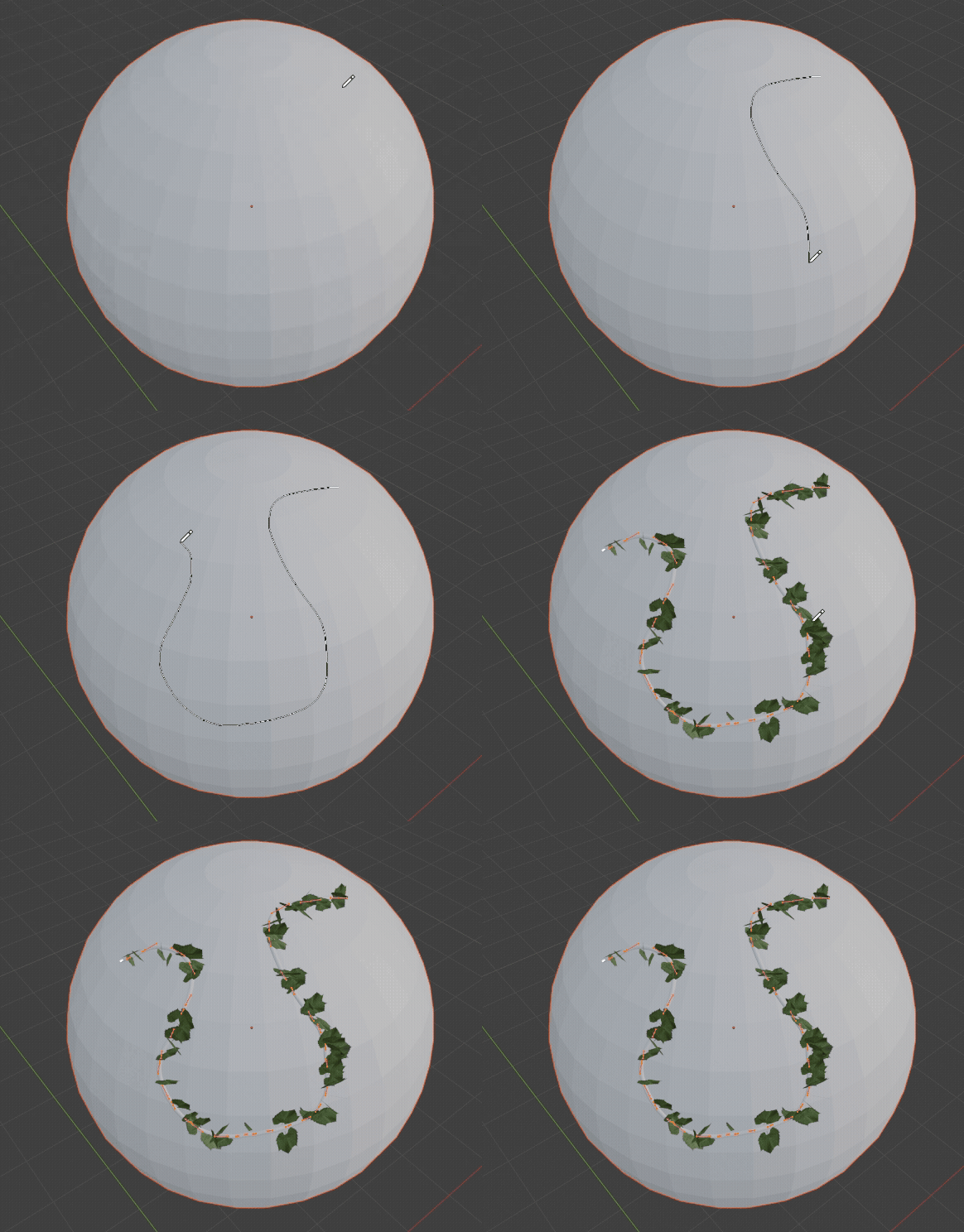
For the vines, I wasn’t going to place them all by hand, so I made another tool that let me draw a curve, and the vine would automatically follow its shape.
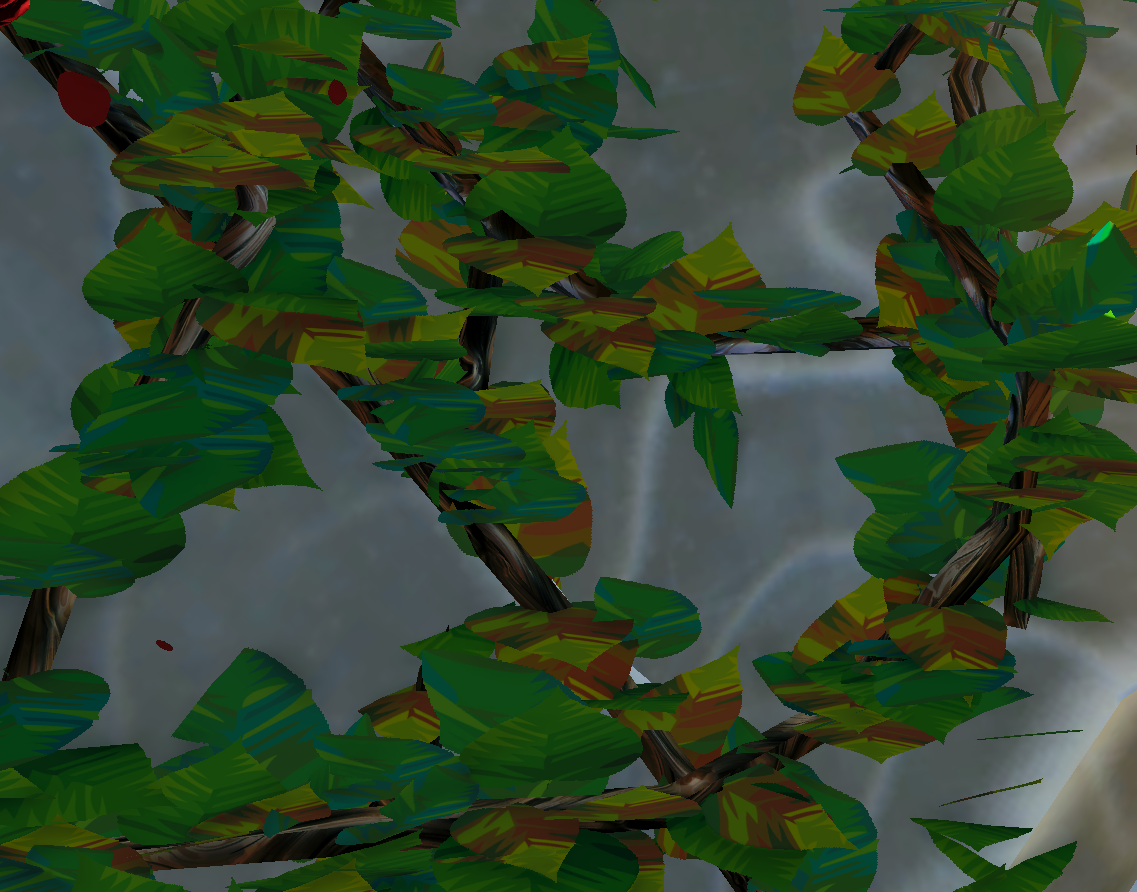
After creating the vine, I made leaves spawn along the curve path to give it more texture and detail. I designed three different leaf textures in Illustrator and placed them on planes to optimize the tool’s performance.
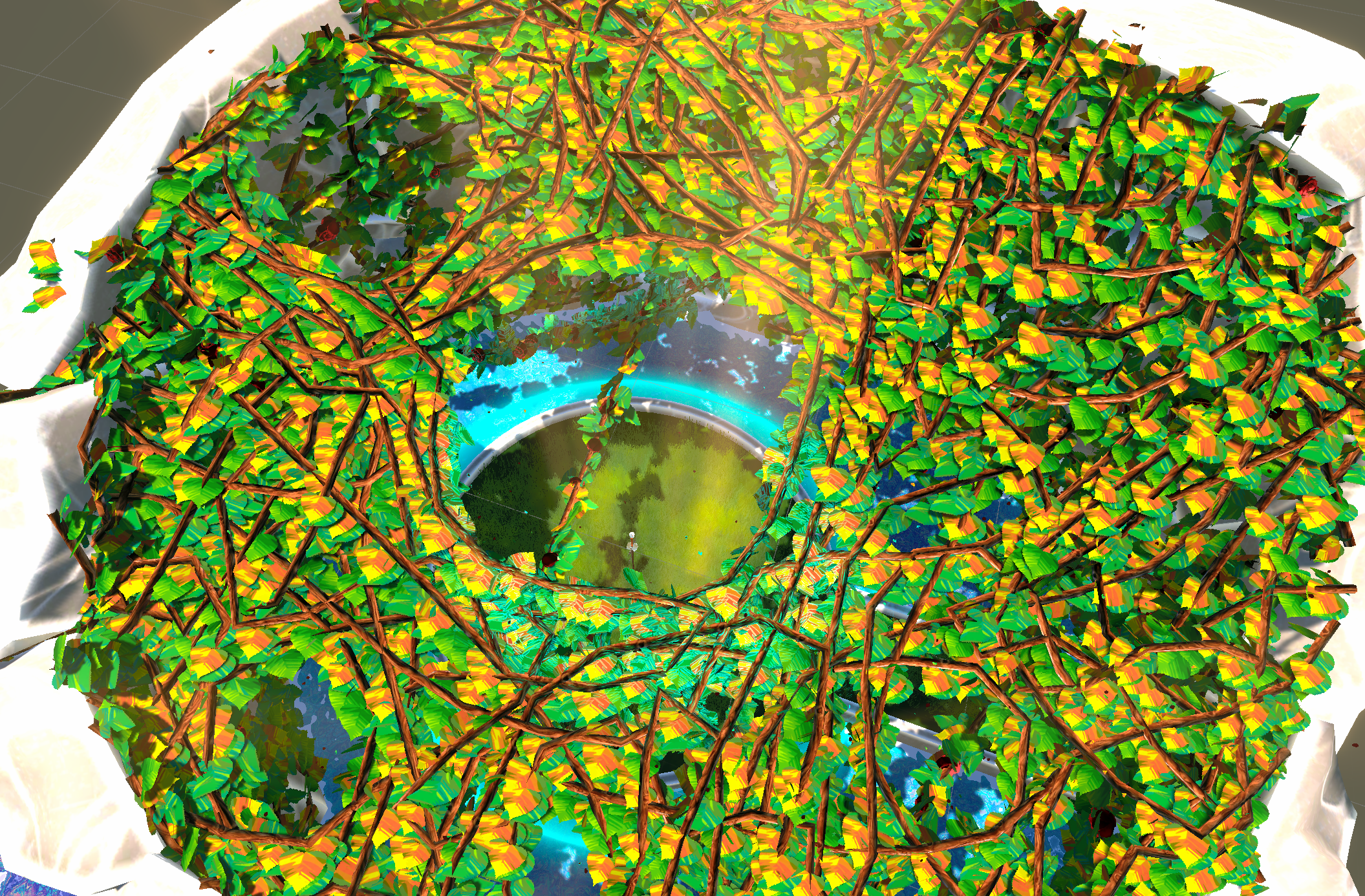
After all that, I ran into a big problem, performance. Spawning tens of thousands of leaves, even if they were just planes, wasn’t ideal. Some leaves were also appearing on sides that weren’t even visible. To fix this, I added a calculation during the leaf spawning process that let me control which direction they appeared in, so the hidden sides wouldn’t generate any leaves.
Water:
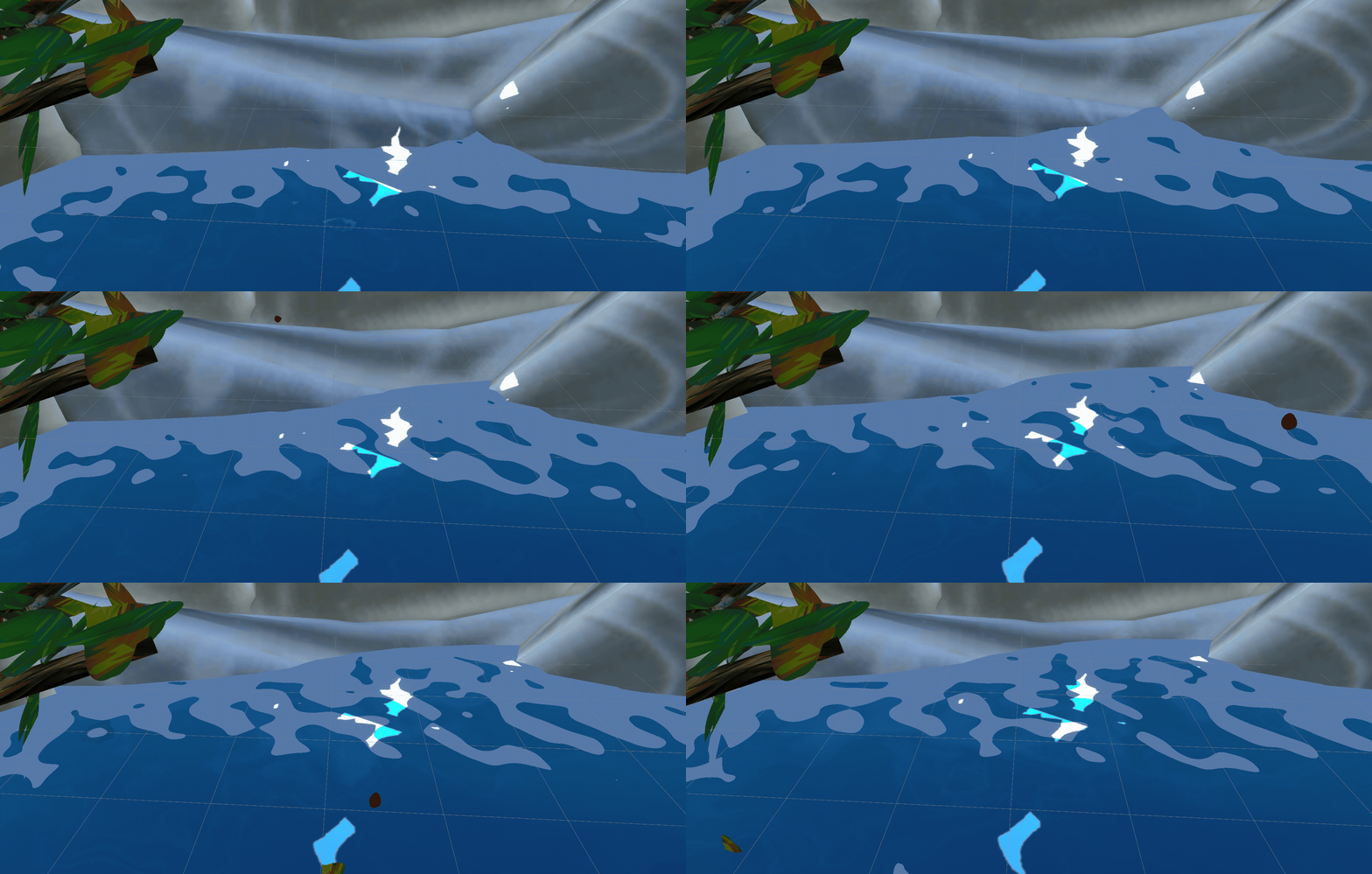
To fill my scene and avoid having only grass, I created a water shader that adapts to the shape of the objects it touches, forming foam around them.
To make it feel more alive, I added a subtle wave motion that gently moves the water up and down.
Tree Trunk:
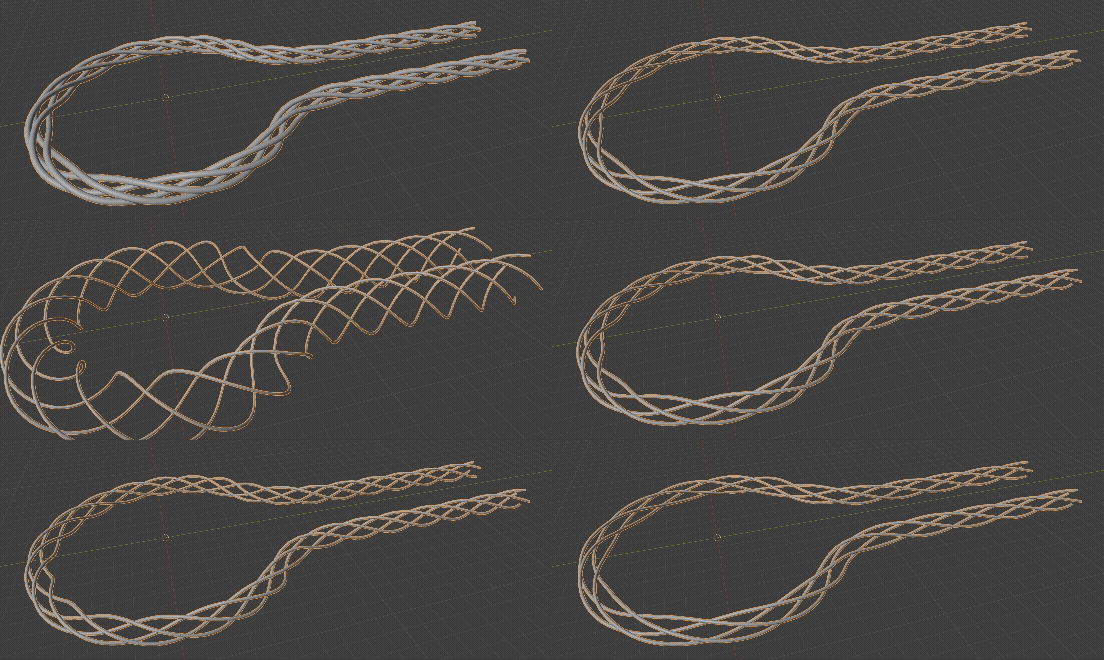
For the grass edges, I wanted something that would connect the vines with the grass, as if the vines had taken over. To achieve that, I made another tool that intertwined tubes together to form a kind of magical root.
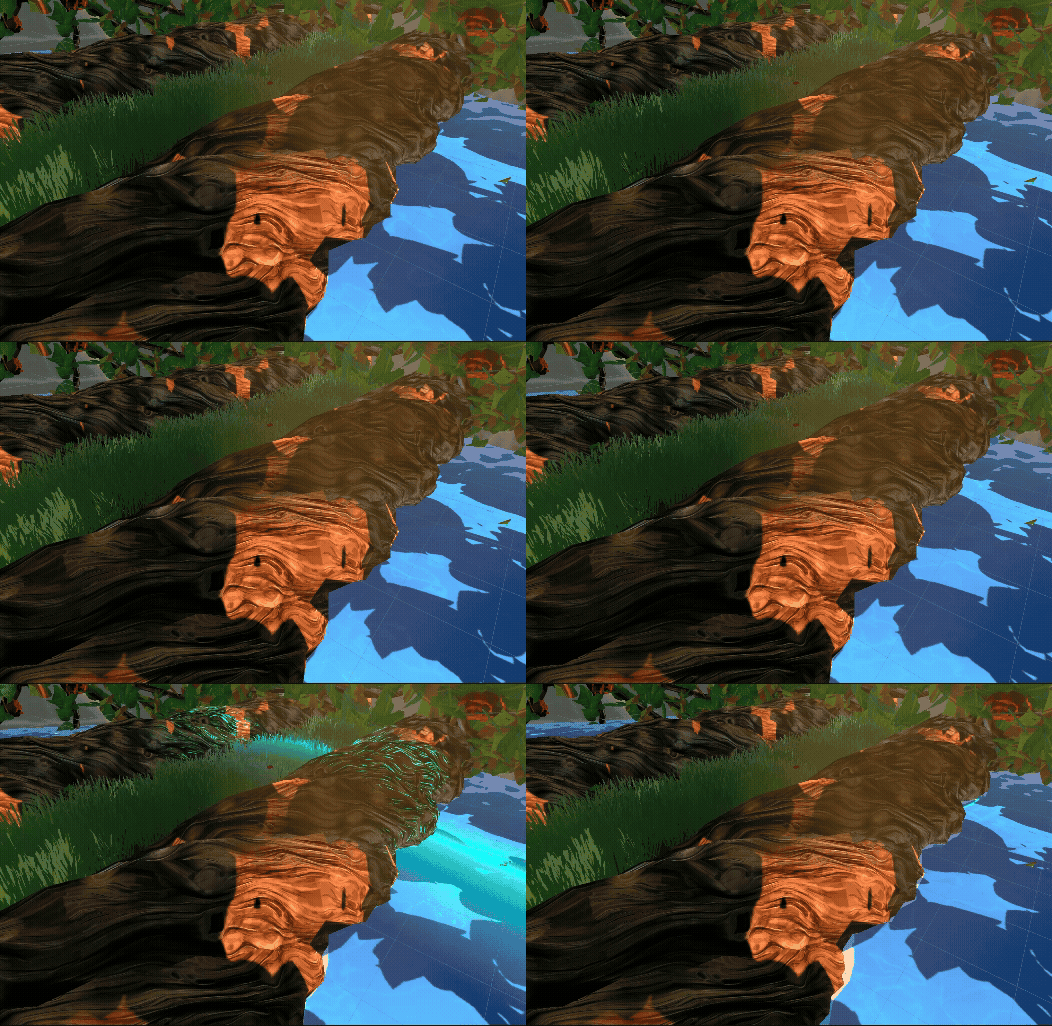
To finish off all the wooden parts in my scene, I created a wood material in Substance Designer with tiny scratches running along the length of the surface. They’re invisible at first, but when my breathing shader activates, it turns on an emissive inside those scratches, bringing the material to life.
Grass:
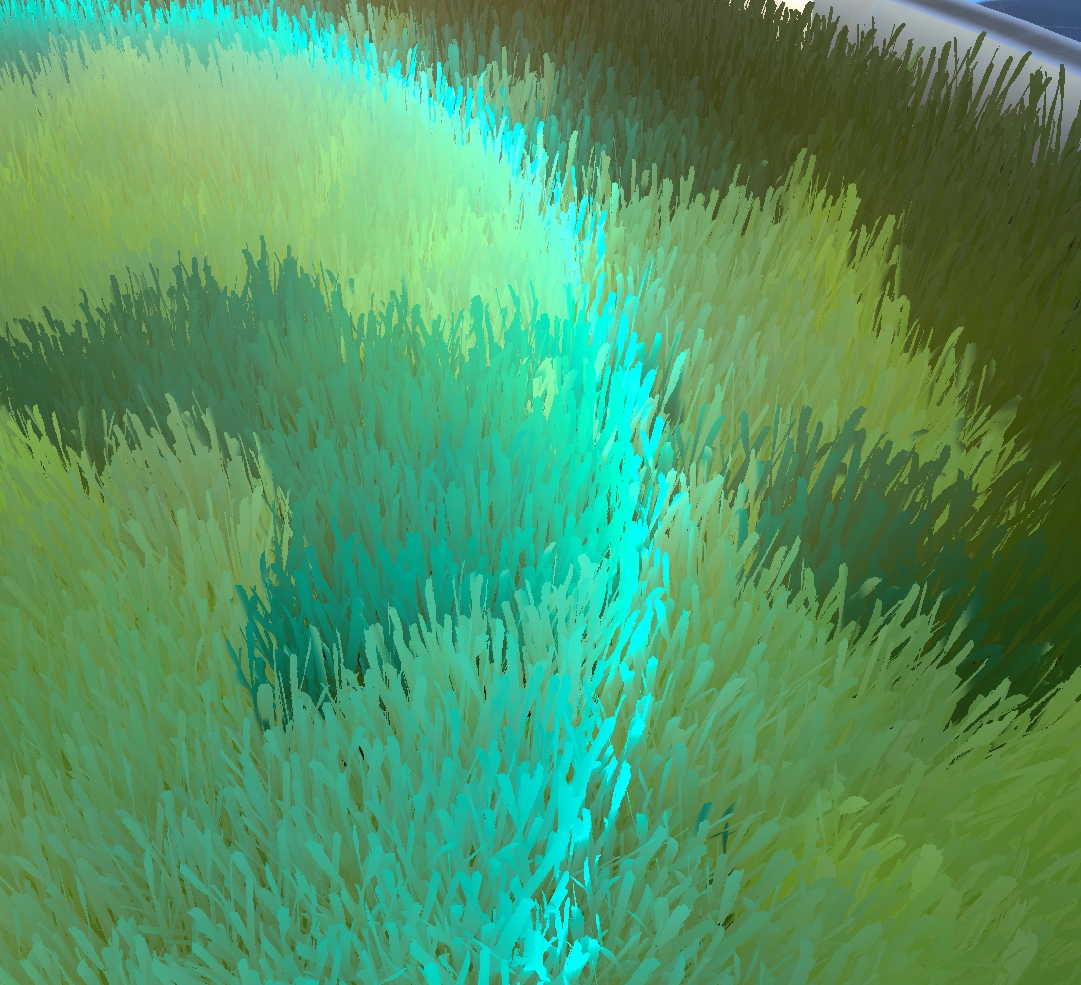
For the main land where my sword was going to stand I made a grass shader directly in unity with few smaller effects like wind making the grass blades moves…
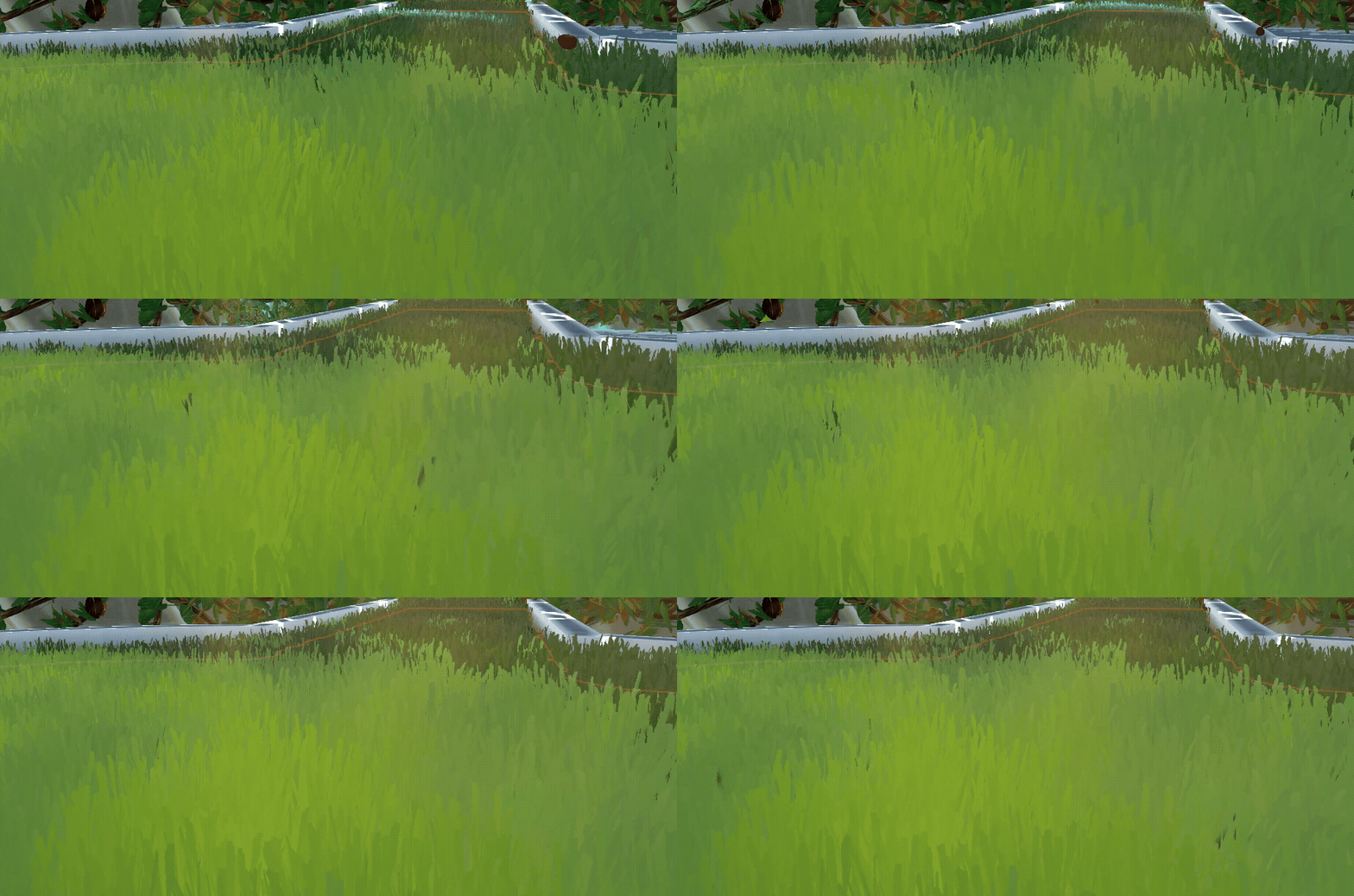
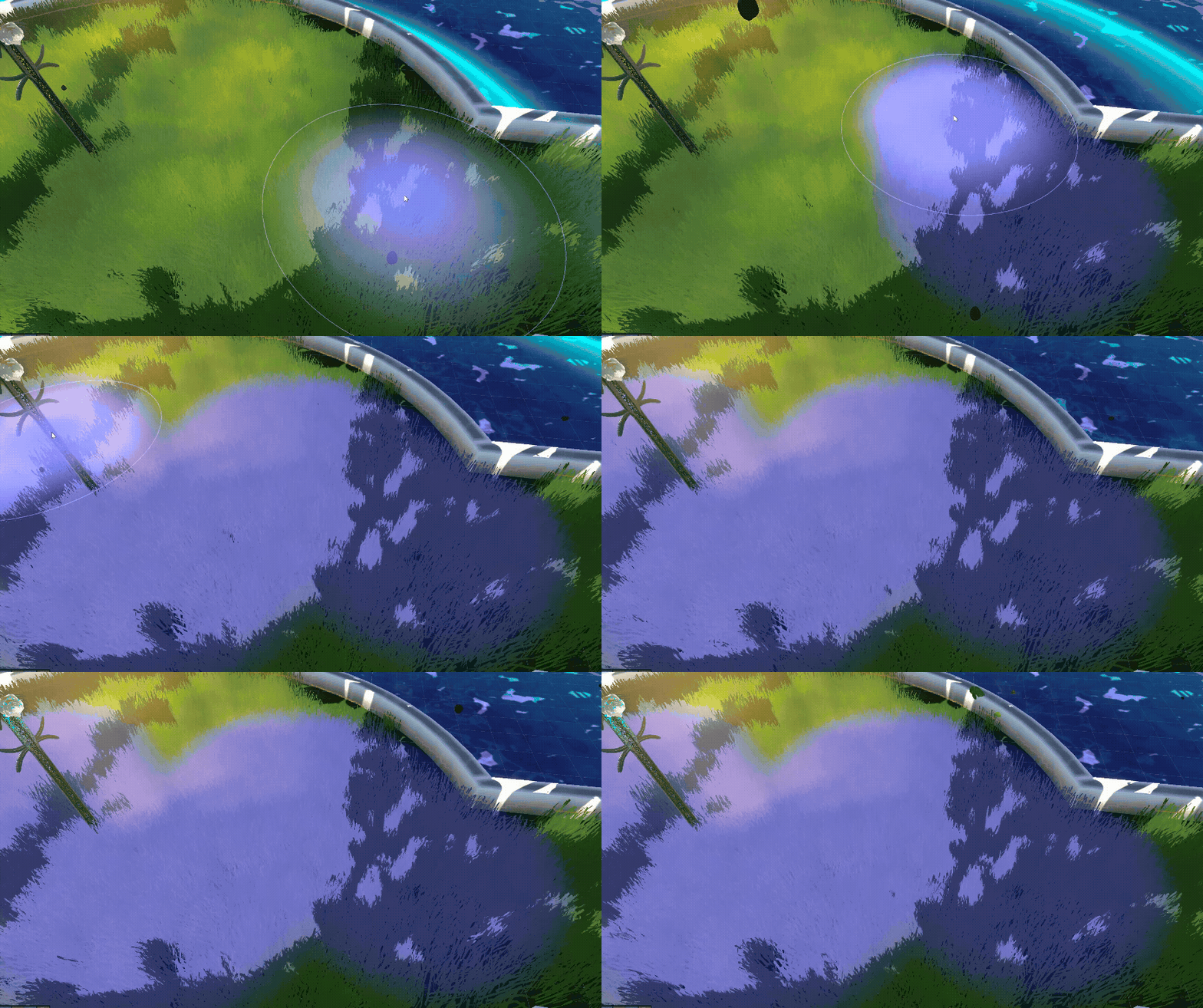
For the grass color, I made it adapt to the color of the ground. This way, it wasn’t just one flat shade I could paint certain areas to be brighter or darker, giving the terrain more depth and variation.
If I had more time for this project, I would have adapted the wave pattern of the water and the wind effect on the grass so that my breathing effect could influence them too, bringing even more life to the scene.
I was really happy to work on this project it felt like much more than just a simple assignment. Considering I only had three weeks to work on it alongside my classes, I’m really proud of the result and everything I was able to create.